Informal care in Alzheimer's disease
Marieth shares her experiences and the impact on daily life
Marieth van Boxtel - Mercx tells about life with her husband Walther, who was diagnosed with Alzheimer's disease. What started with small changes grew into a new daily life in which love, loss and connection constantly coexist. In her story she shows how she keeps looking for something to hold on to, for contact and for moments that are still together.
Living together with Alzheimer's
"Your life gets smaller," says Marieth. "But at the same time, you start looking differently at what's left." Three years ago, her husband Walther was diagnosed with Alzheimer's. But actually it started earlier. Small changes. Things that just weren't right. "That nonplussed feeling," she calls it. "You know something is going on, but you can't pin it down yet." Until the moment it does get a name. "Then everything collapses for a moment," she says. "You know what's coming. I've past event through it before with my mother. But when it's your own husband, that's different."
Informal caregiver, again
Since then Marieth has past event an informal caregiver. For the second time in her life. But she consciously chooses not to look only at the loss. "You have to keep looking at who someone is. Not just at the disease. Everyone with dementia is different, so you have to keep connecting with the person they always were." That also means: letting go. Patience. And accepting that not everything goes the way it used to. "I have to swallow a lot," she says. "And reminding myself: he's sick, he doesn't mean it like that."
In this quest she is not alone. Also their children, with their own families at a distance, are indispensable to her as caregiver.
Staying together
Yet there are still moments of togetherness. They play sports together. Go to concerts. Ride bikes. Cooking. Little things, which are just getting big. "I count my blessings," she says. "He's physically healthy. We can still go out together. That's worth a lot." But the loss is there, too. "You slowly lose your buddy," she says softly. "Someone with whom you shared everything."
Connection at the Alzheimer Café
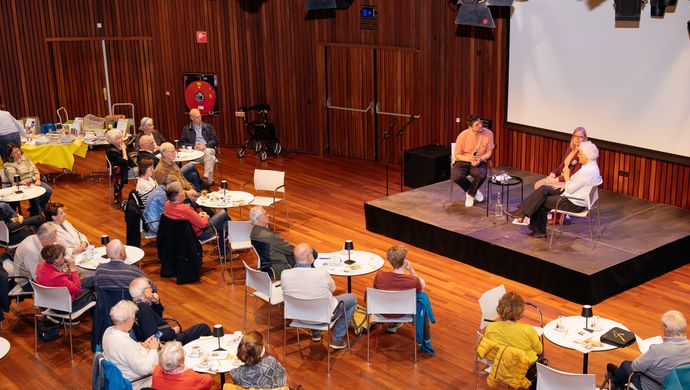
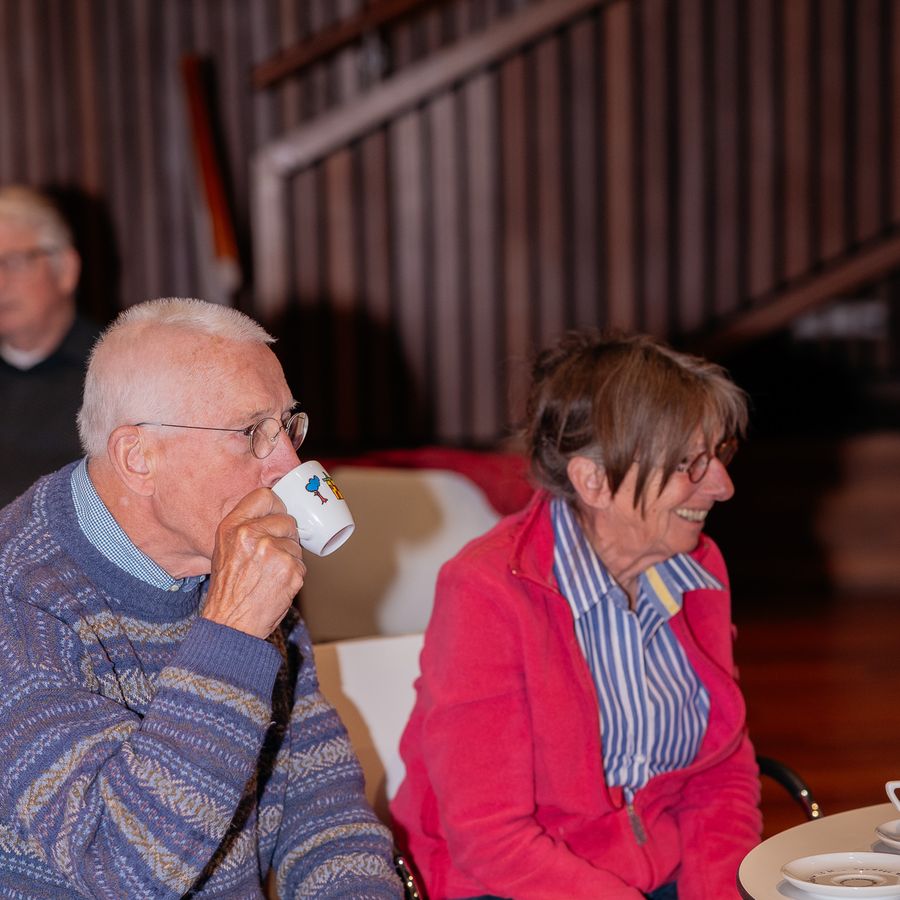
This is precisely why the Alzheimer's Café has become a valuable place for her. "In the beginning I thought: is this something for us? But it's SO valuable," she says. "You meet people who are going through the same thing. You hear stories. Sometimes you recognize something, sometimes you get a tip. Sometimes the power is in something small. A conversation. A recognition. Or someone really seeing her husband.
"He was involved in the conversation at the café by the speaker and addressed about his technical background, because they knew that about him." she says. "He then completely blossomed."
What it brings her
For Marieth, it's ultimately about connection. "Attention. A conversation. Being together for a moment. That gives strength." And that is exactly what she finds there, in the moments she is there. In being with others who are going through the same thing, in the recognition of stories and in the small conversations in between that unexpectedly mean a lot. Those moments give her footing and make her feel that she is not alone.
Want to know more about the Alzheimer Café and this year's program? Then check out the page with more information and current activities: Alzheimer Café