

Observations of a theater rat: the expedition
The theater is a place to watch, to listen, to observe. A magical place. You sit down in a chair, the light goes out and a new world reveals itself. But as you watch, you are being watched. Moths, mosquitoes, spiders, beetles and silverfish make up the audience of the theater-audiences who walk in, hang up their coats, go to the restroom, find a seat and find themselves unwatched in the silence of the auditorium.
We assume that only we - the people - observe the world. This anthropocentric mistake shuts us af from countless encounters and turns us into a lonely and ignorant species. What would happen if we opened ourselves to the gaze of other living beings? If we realized that we are not only the viewers but also the ones being watched?

Inspiration beforehand
Observations of a theater rat is a story in which the theater is not an enclosed space but a porous home for tails, wings and paws. An exercise in sitting still and being watched, in order to enter into a conversation with the world from that position and so - who knows - to strengthen some of the ties that were severed long ago.
To understand what lives here, we must try to check this place through the eyes of non-human beings, says Marjolijn. From the outside, this is a rock. On the inside, it is a system of corridors and caves. Unlike most cave systems, this one is dry. Dry means lifeless. Because water is the most important condition for life. Despite the dryness, there are creatures that manage to survive in this cave system.
Why do we support this project?
The Parktheater finds it important to support this research because it changes our perspective on how we look at things. It makes us aware of the often invisible nature that lives in and around us. And that is ultimately what theater does, offering new insights and different perspectives. It also provides the source of inspiration to create a special performance in which the hidden world of these small inhabitants comes to life. This is how we connect ecology with culture and playfully bring our audience into contact with both conservation and theater art.
Join the expedition yourself
Would you like to be part of this project? Join Marjolijn on an expedition through the Parktheater Theatre in November or join the underground consultation.
July 2024 - The first summer expeditions
The research has started and Marjolijn and Jap have started making an ecological scan of the Parktheater. The Parktheater is very excited and especially curious about this hidden green world! Would you like to join us on a journey into this world? Read Marjolijn's first blog here:
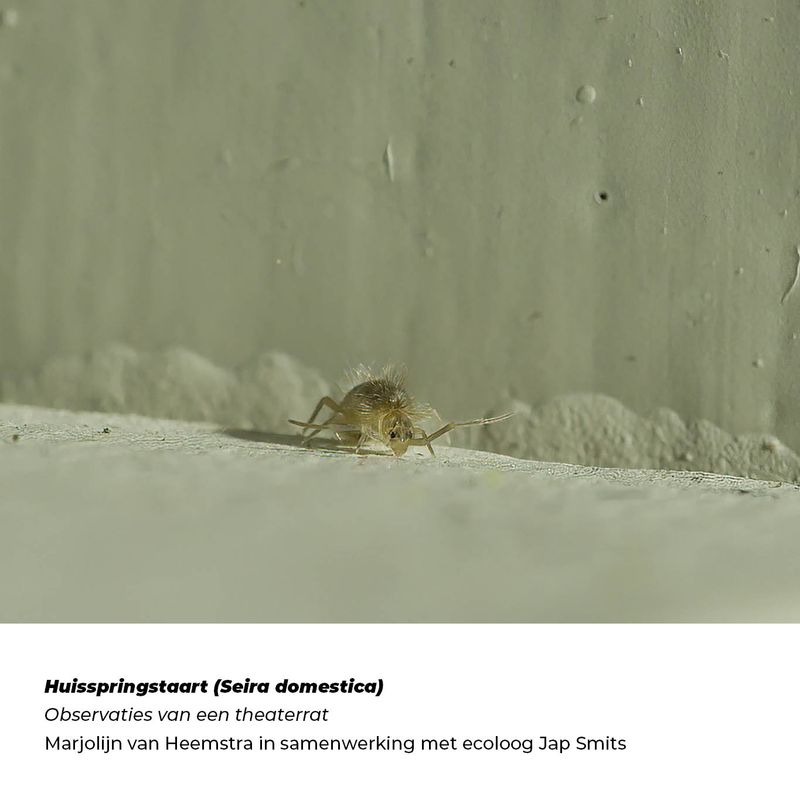
The most special find of this expedition: the Seira Domestica. In other words: the house springtail. A mysterious creature, shiny silver, wingless, scaly and with a long claw and one large tooth. Descended from the large springtail family. Four hundred million years old, they are among the oldest animals on Earth. An exoskeleton, growing and molting all their lives. A skin so water-repellent that it's being researched because it could benefit us. Named for the jumping fork under their belly that allows them to jump as much as 16 times their own length and anchor themselves in the ground to keep from blowing away.
The specimen we found here sat quietly. Seemed at home, under the magnifying glass her eyes were two large, black resting points. She looked fragile, about 2.5 millimeters, the first brush or cloth would sweep her away in no time. The longer I looked at her the more I wanted to protect her from the cleaning service but I didn't dare touch her, too fragile, my finger would crush her immediately. Did she check me? With anxiety I left her that afternoon. How long will she survive here, in this hostile cave system? I look back twice but, of course, don't check her, small as she is. And then, two weeks later, when we return, we find her in exactly the same place!

September 2024 - The first research results are known!
On September 1, we festively kicked off the season with the annual Open house! During this event, the first research results were announced by ecologist Jap Smits and Marjolijn van Heemstra.
"...animals are always observed. The fact that they can observe us has lost all significance. They are the objects of our ever-extending knowledge. What we know about them is an index of our power, and thus an index of what separates us from them. The more we know the continue away they are." - Why look at animals, John Berger
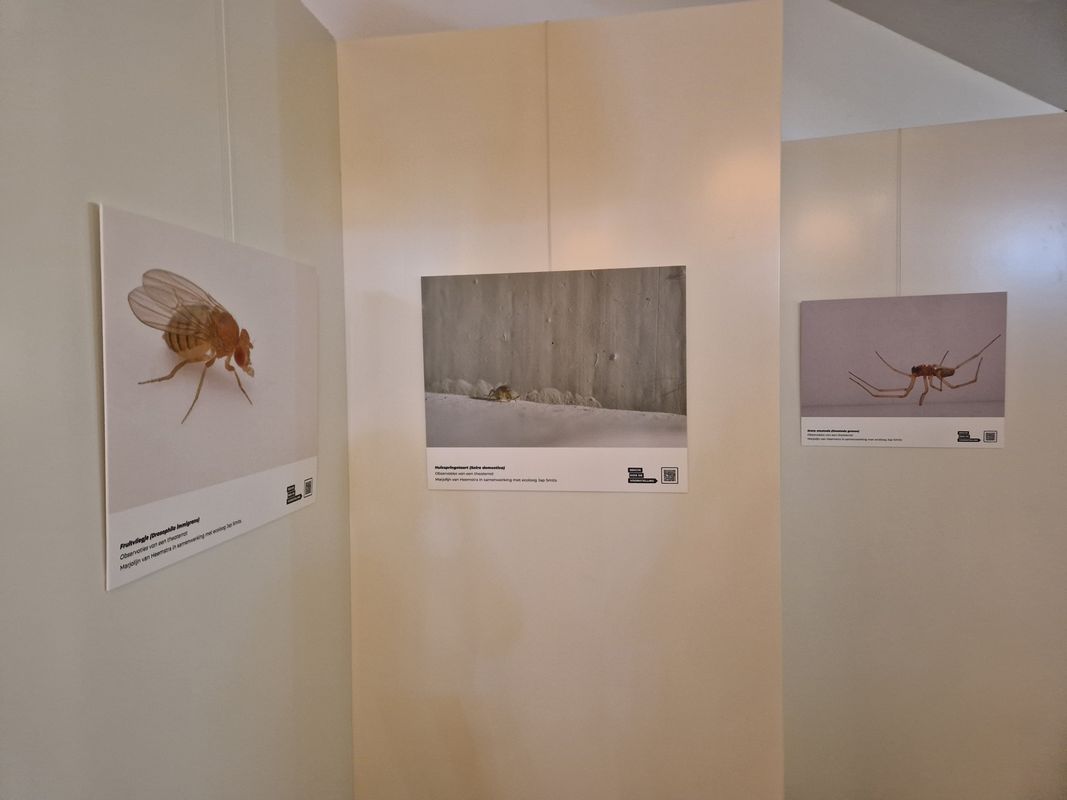
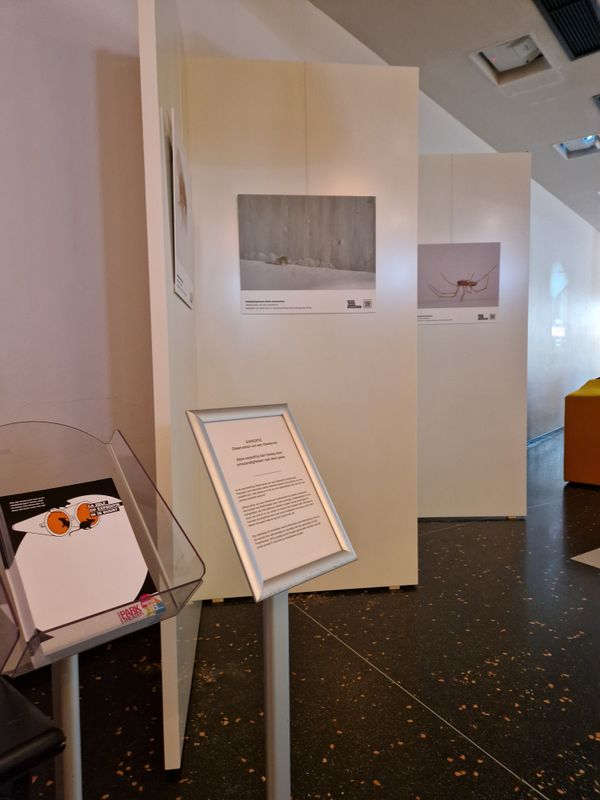
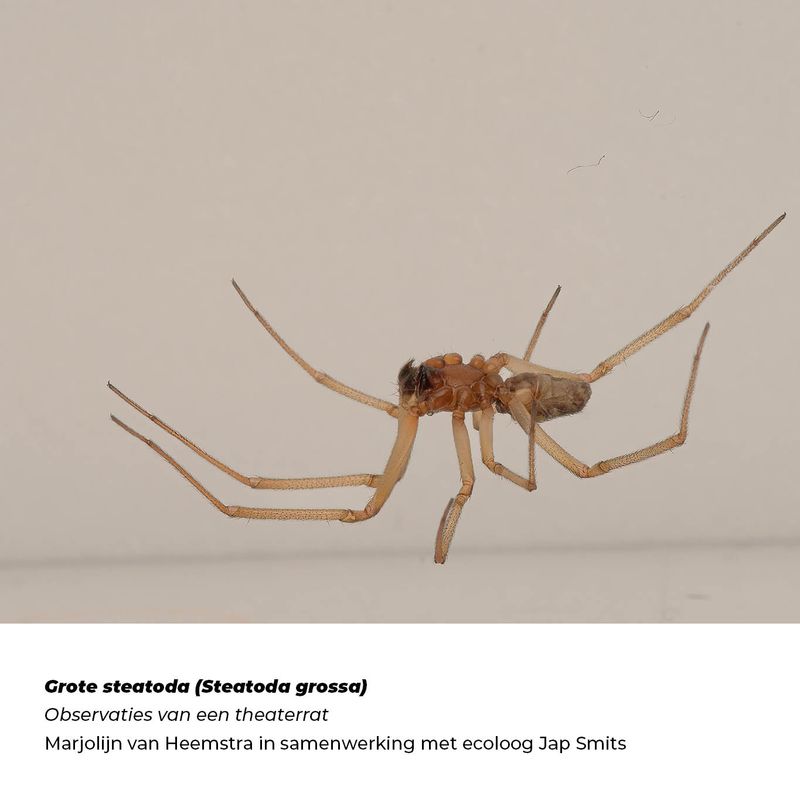
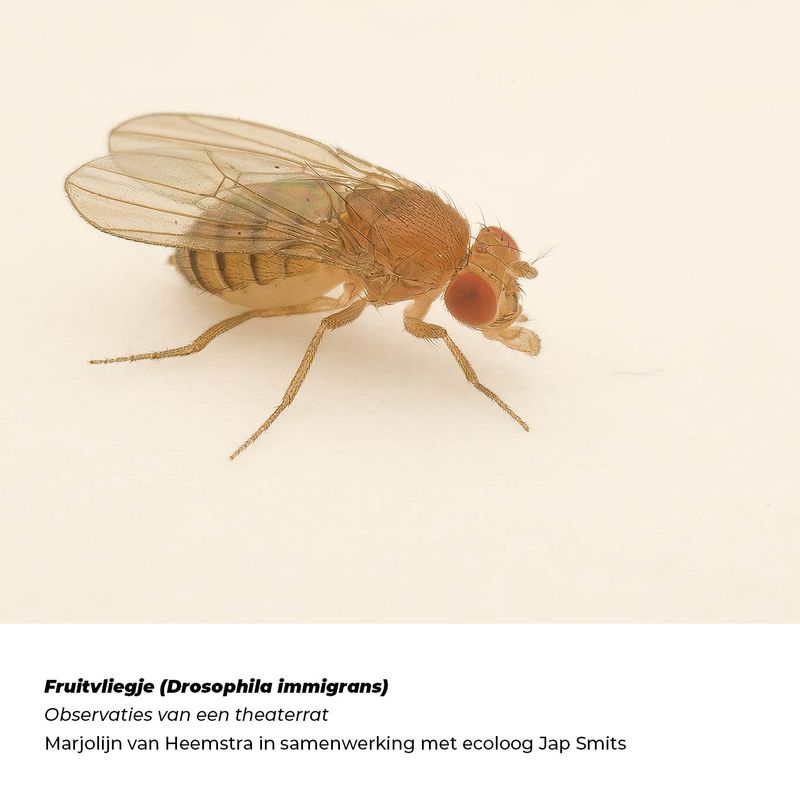
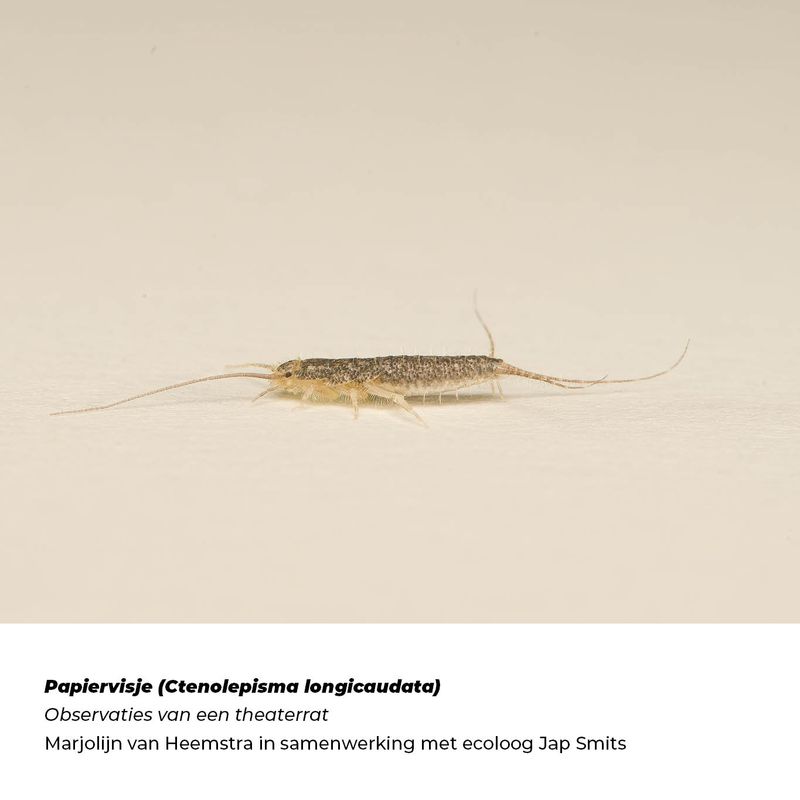
During the summer closing Marjolijn and Jap went on several expeditions. They investigated every little dark and hidden corner within this immense cave system. On one of the expeditions, Jap and Marjolein stumbled upon a very special insect. One that you almost always overlook because it is so small. We are talking about the House Springtail. Jap discovered it during an expedition and captured it. This way we can all admire him! They also came across these insects: the Great steatoda, the fruit fly and a paperfish. Will you step into this green world of the Parktheater? You can check these first research results in an exhibit, on display in the theater cafe until Sept. 30, 2024.
September 2024 -.Make your own ecological scan
Are you curious what an ecological scan of your living room, basement or classroom looks like? Ecologist Jap Smits has some tips for you:
'Think of your habitat as a rock in nature in which all kinds of tails, wings and legs have found their place. They need specific characteristics to survive. Check the space through their eyes. Is it a cuddly creature that needs lots of light or an obscure creature that feels more comfortable in pitch darkness? Do they hide high up in forgotten corners or low down in the crowds? Do they want a dry or rather humid environment?'
Are you going to investigate? We are curious about your findings, share your ecological scan* with us. You can pick up the tickets at the ticket sales or the exhibition. * This card can become part of promotional purposes.

October 2024 - An expedition together with Yuverta
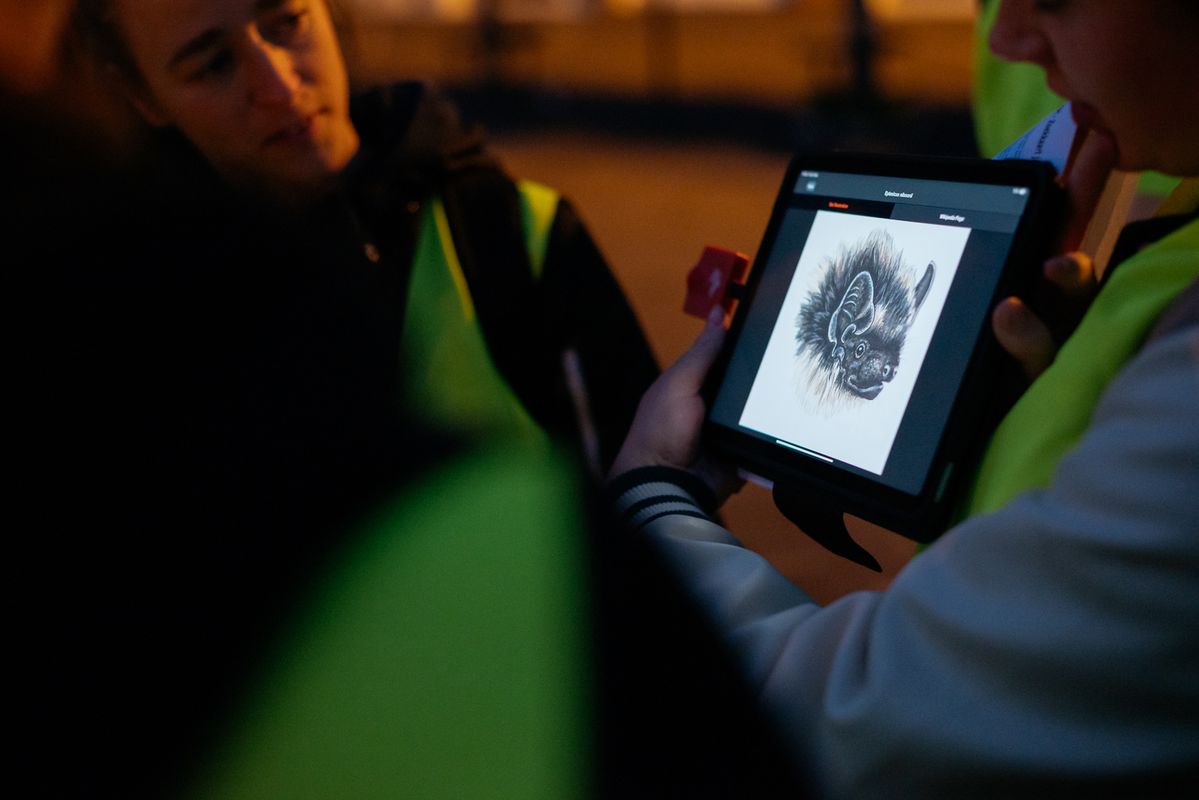
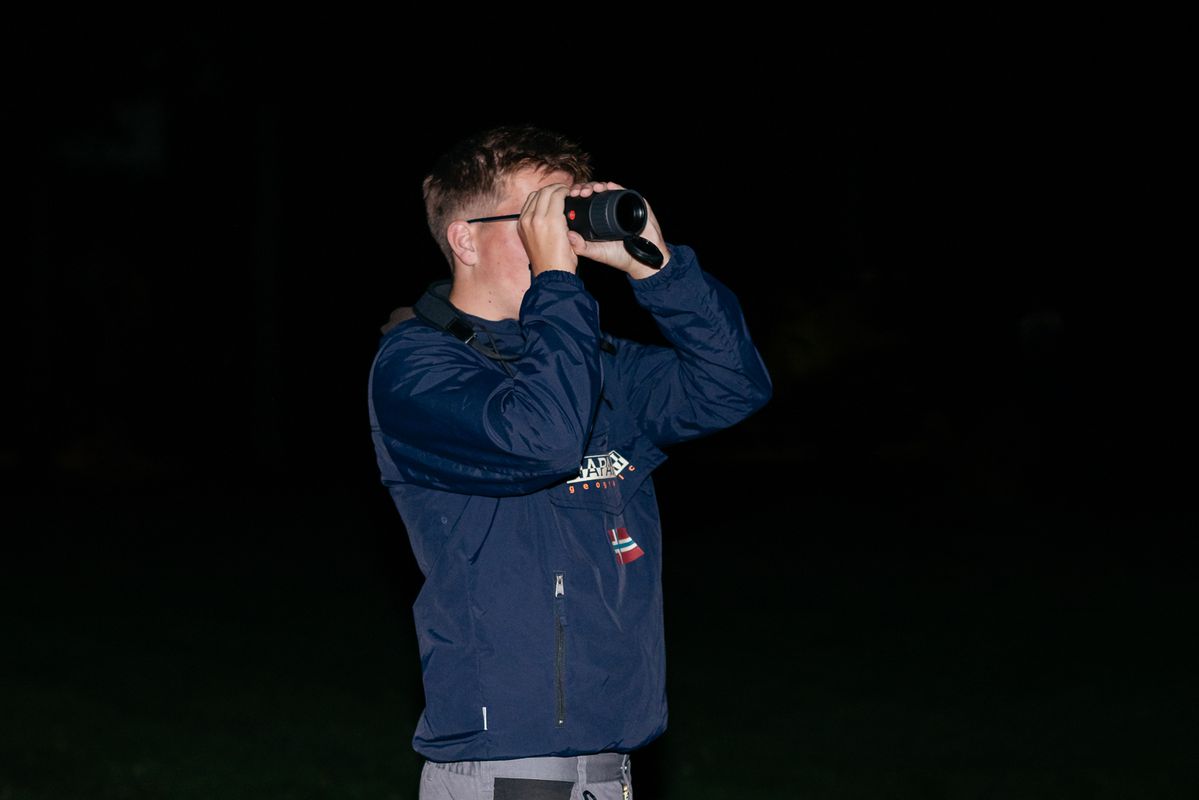
The coming weeks will be extra busy on Thursdays in the Parktheater! Every sidewalk and corner will be examined and studied. Students from Yuverta, the green lyceum, are visiting. Yuverta trains young people to make a positive contribution to the challenges facing the Netherlands and to creating a healthy and livable environment in the future. Accompanied by Marjolijn van Heemstra, they will go on an expedition through the Parktheater. As seasoned researchers equipped with night vision goggles, binoculars, reference books and logbooks, they will go on a voyage of discovery. In search of that invisible world full of life in the theater.
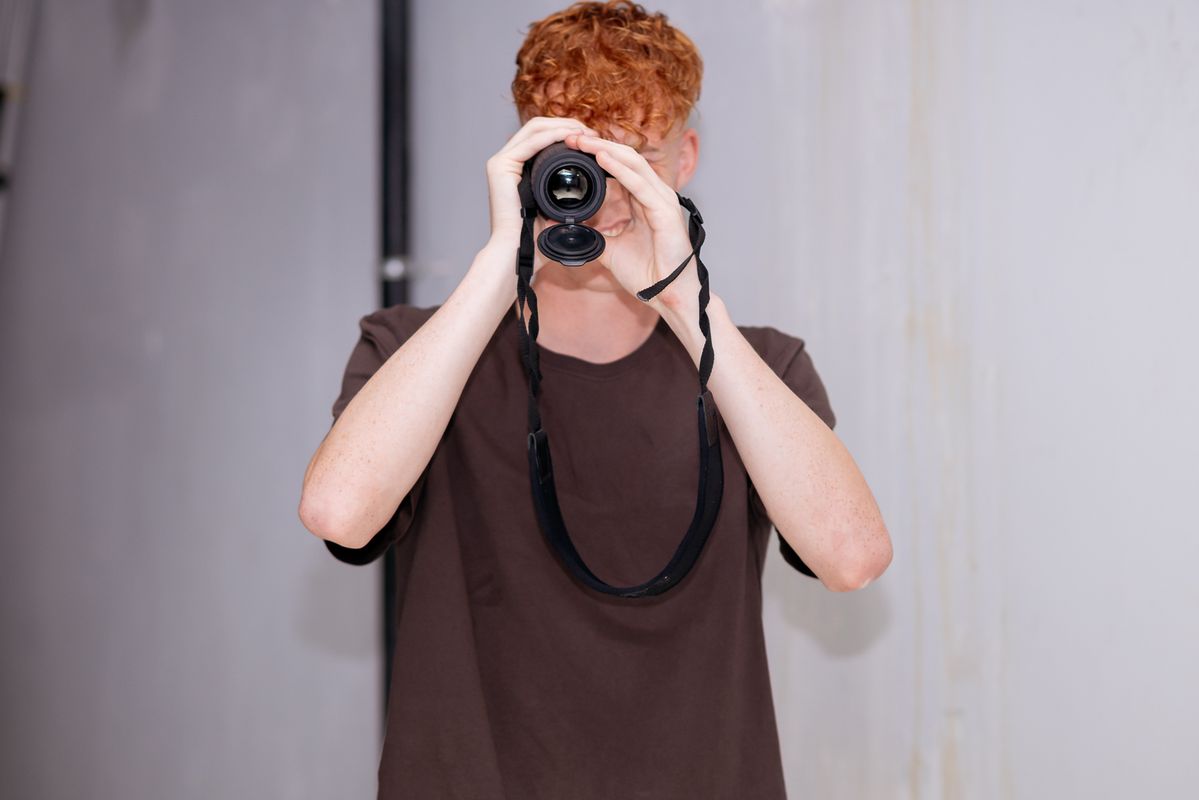
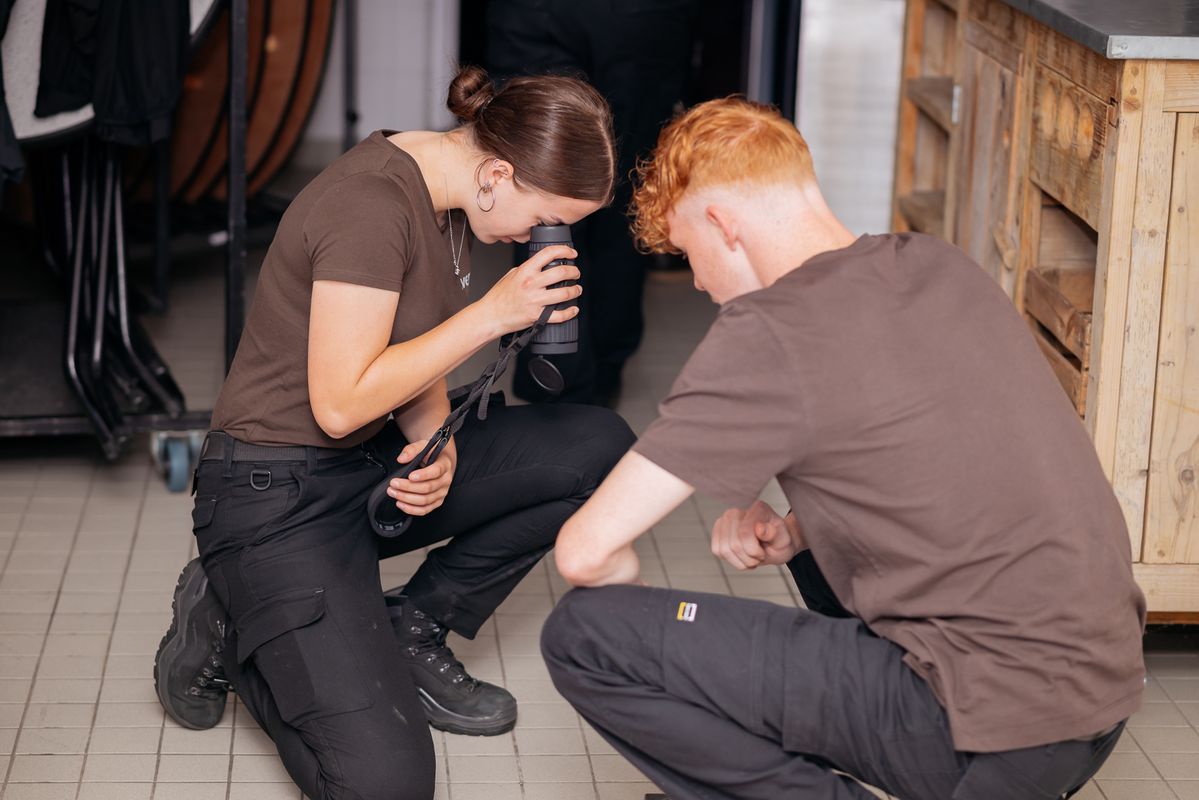
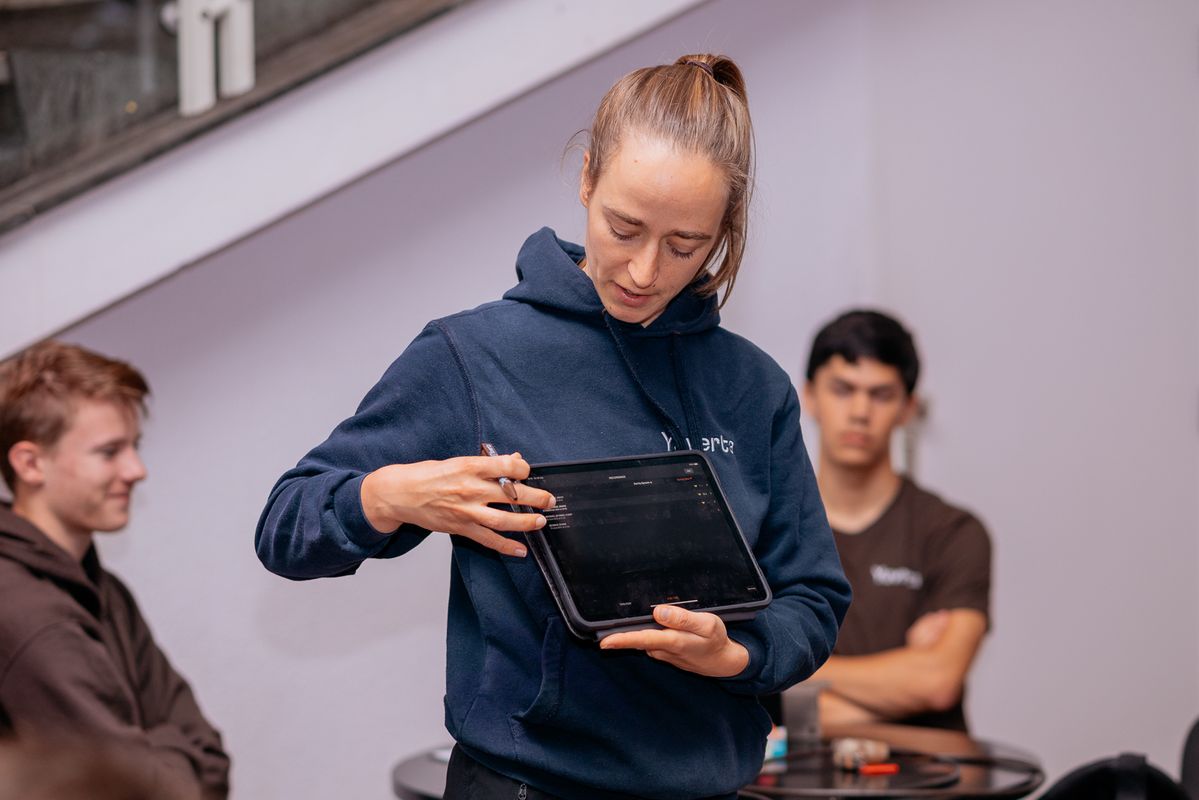
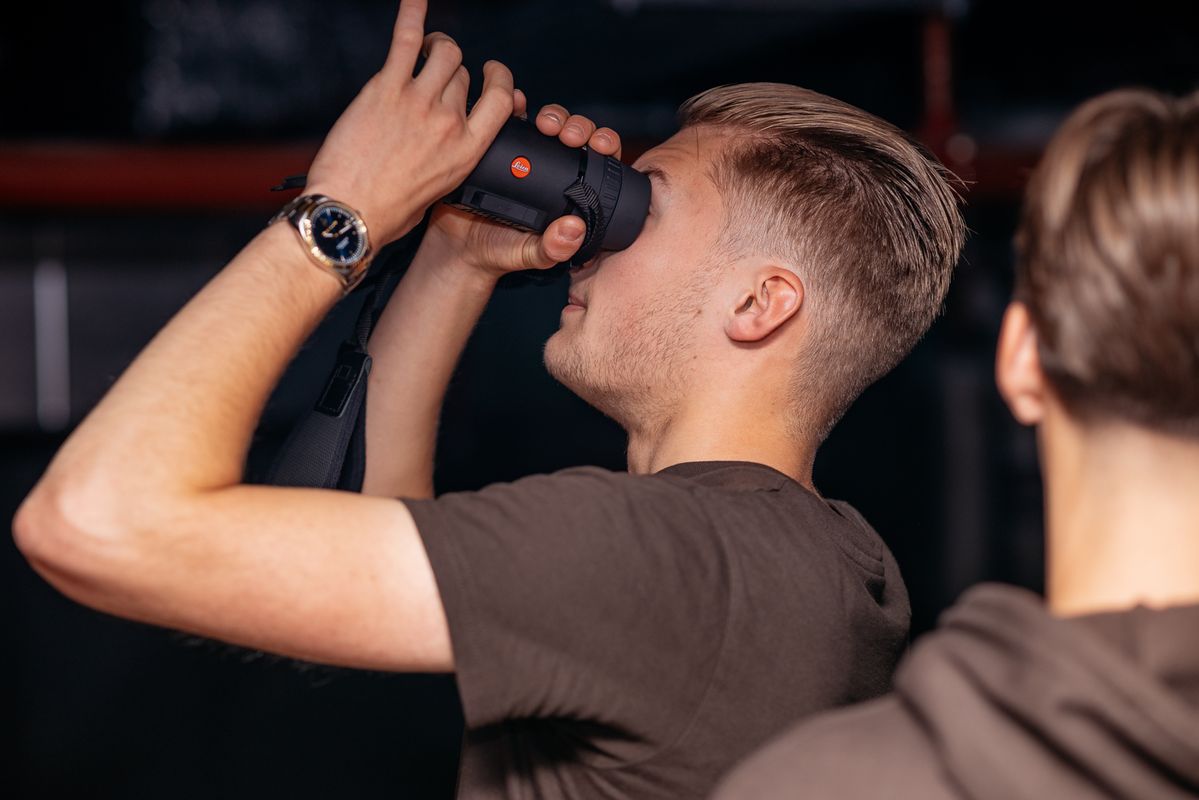
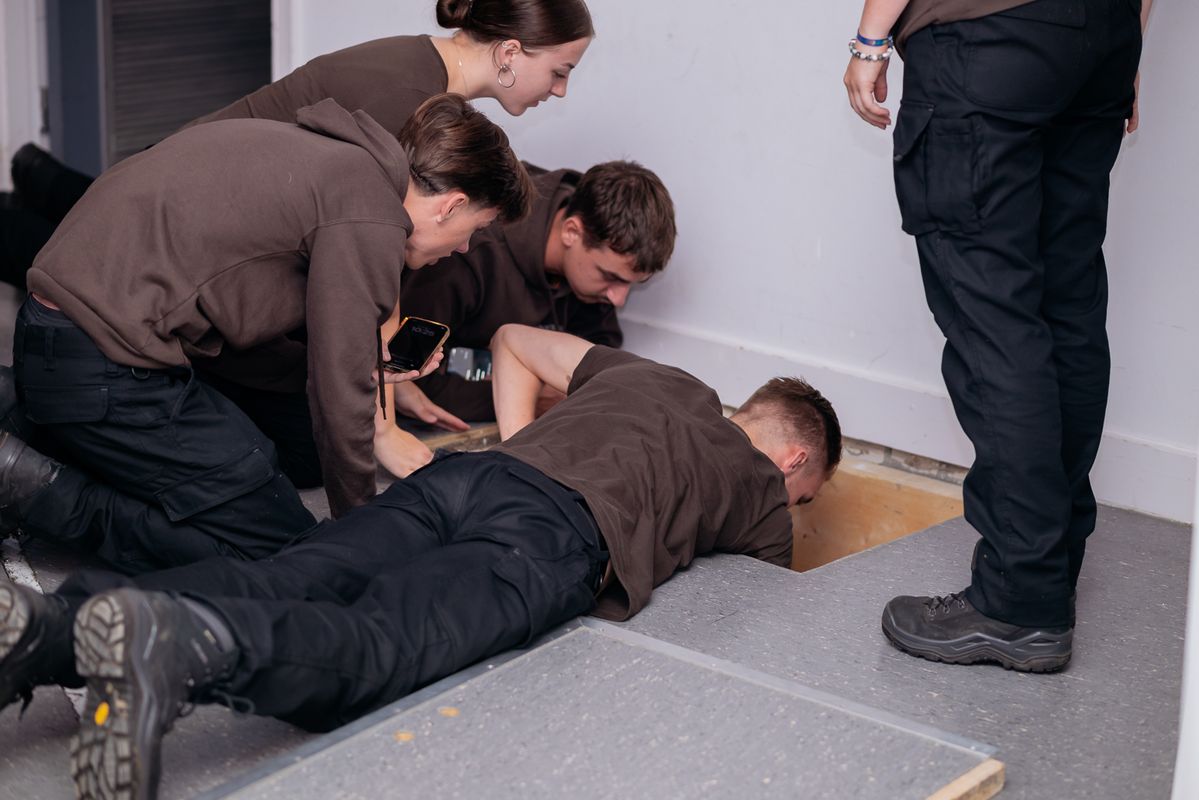
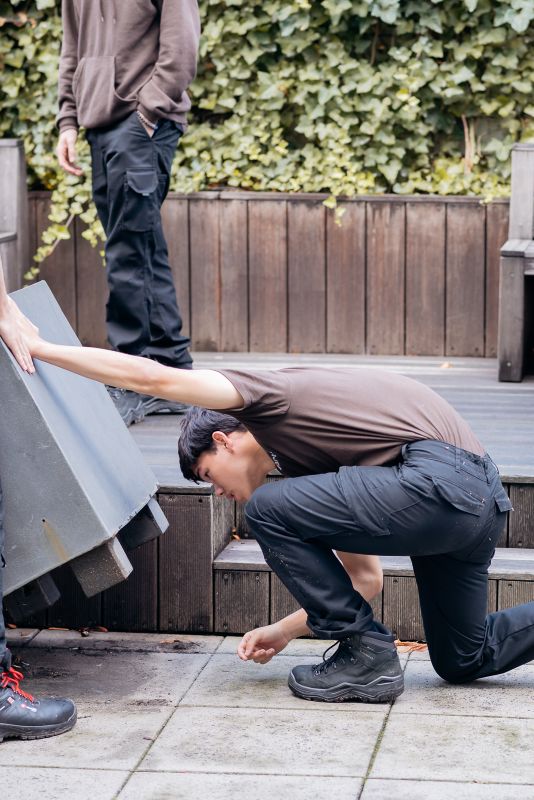
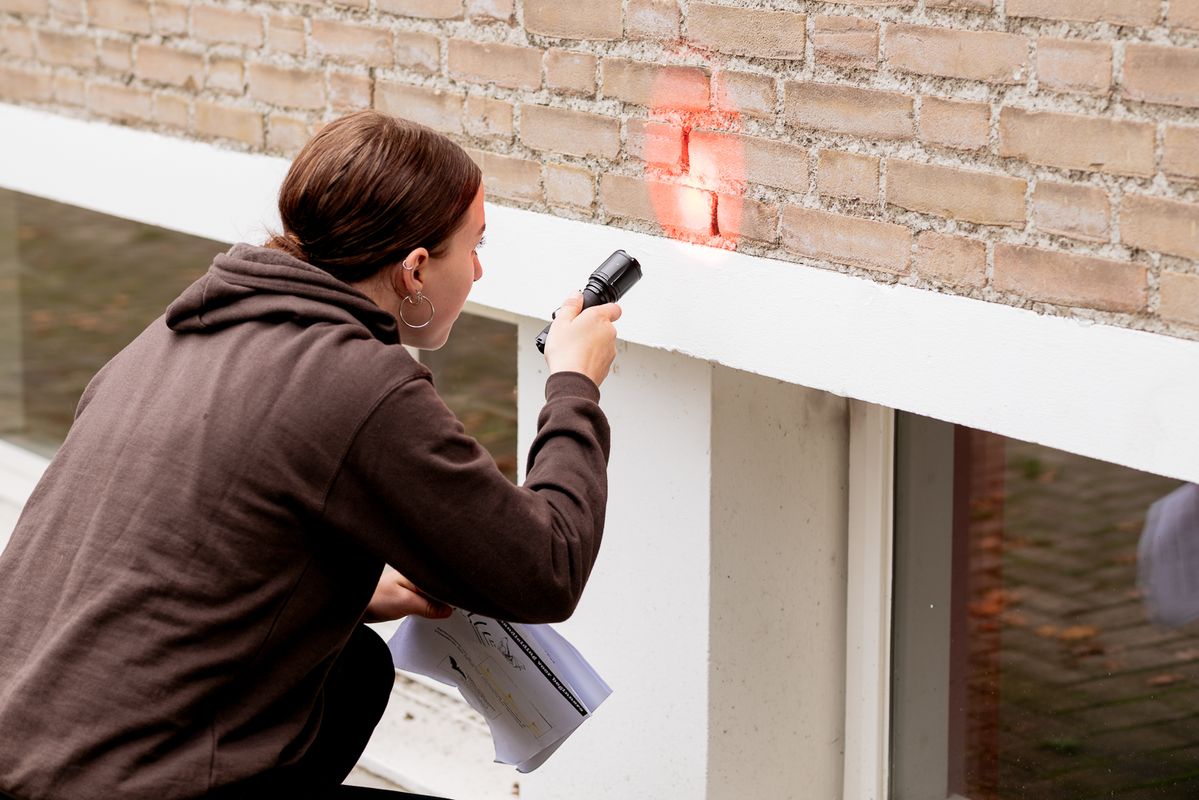
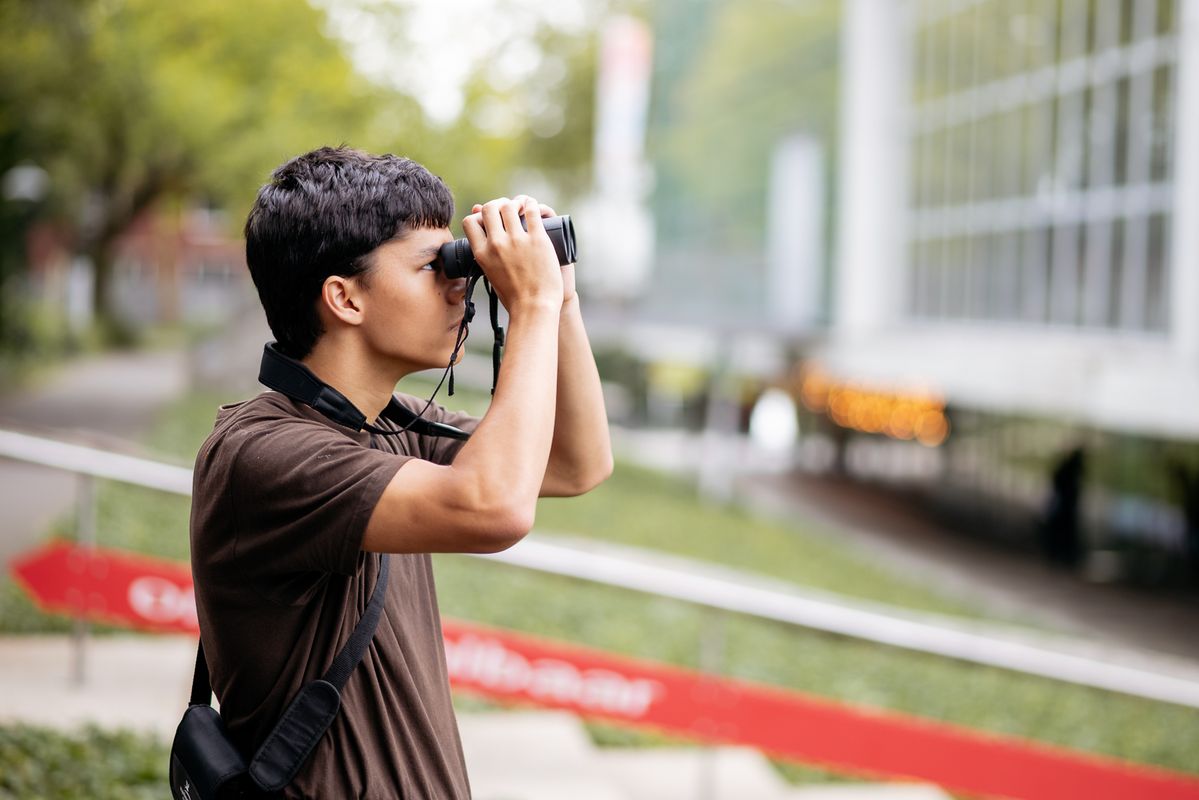
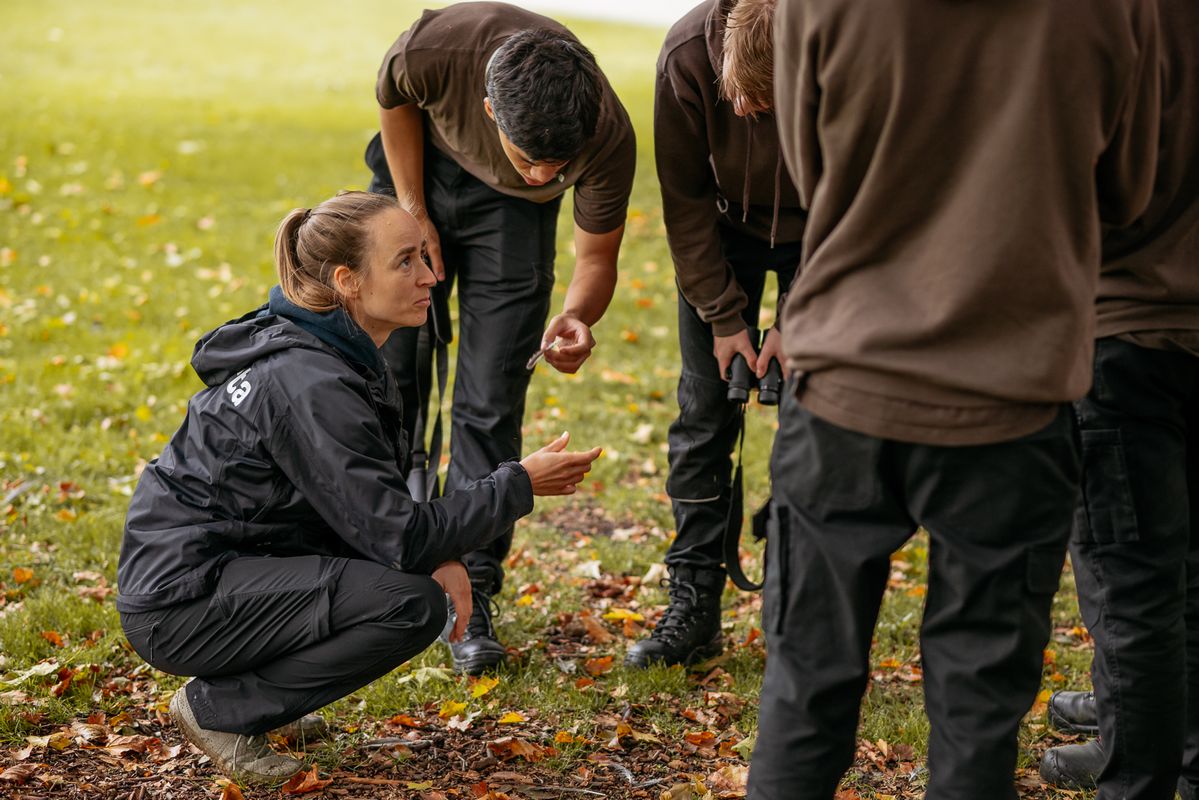
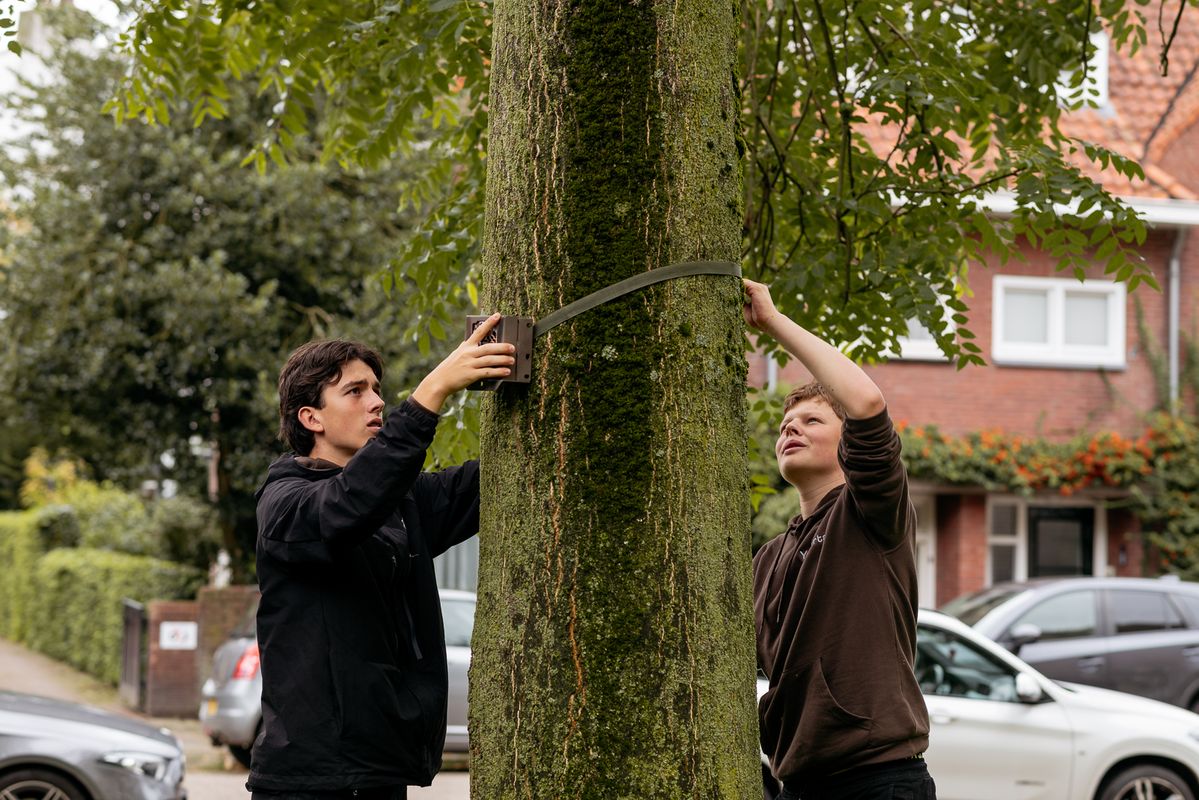
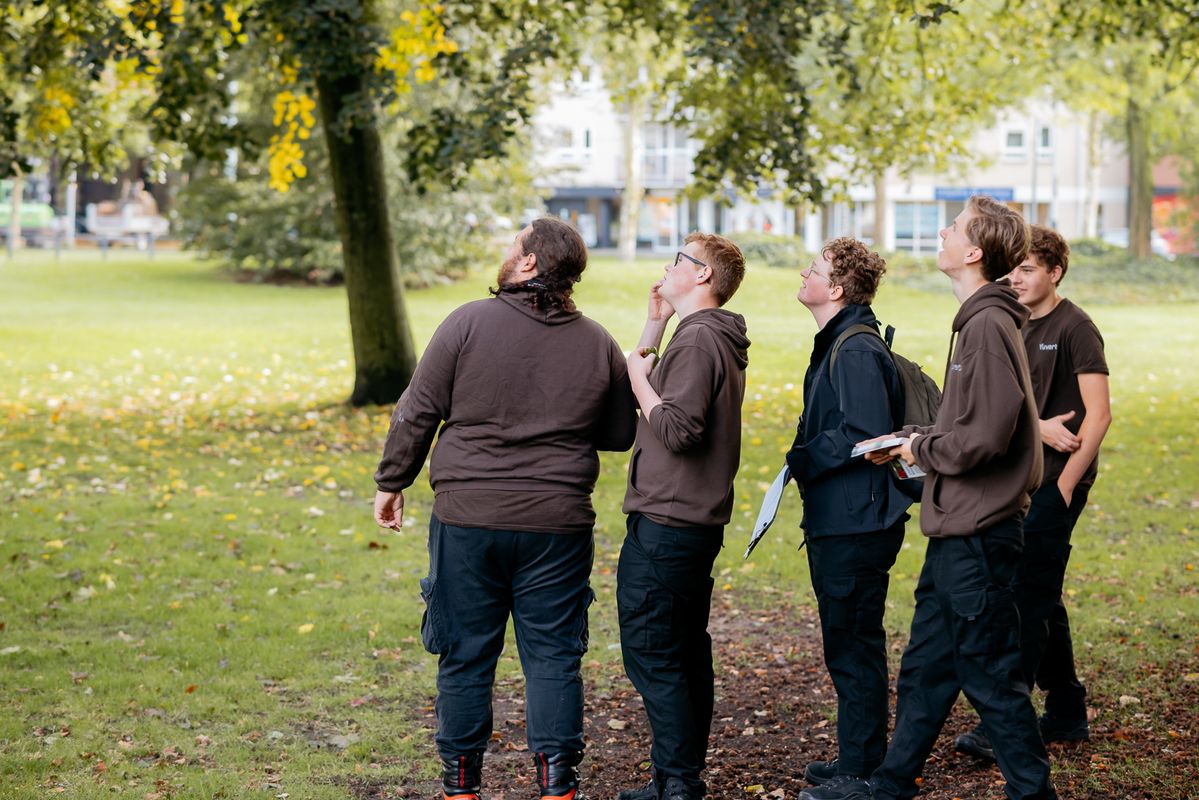
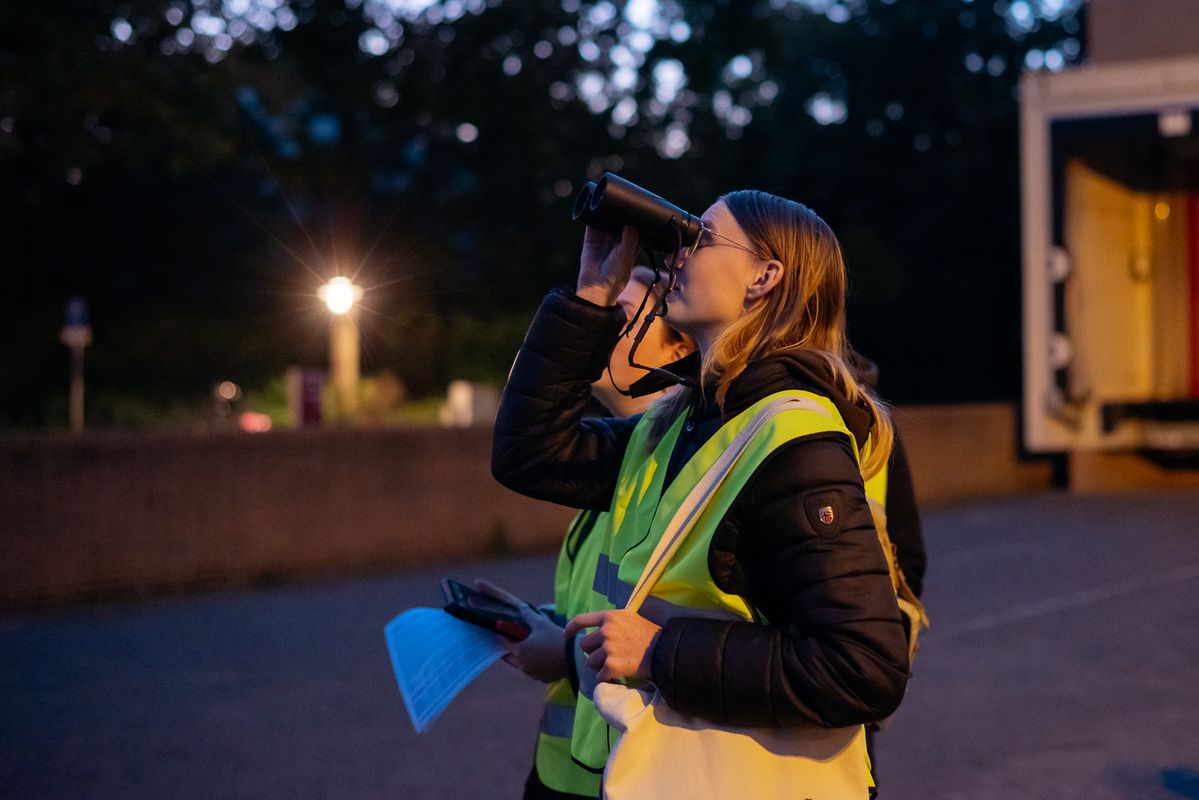
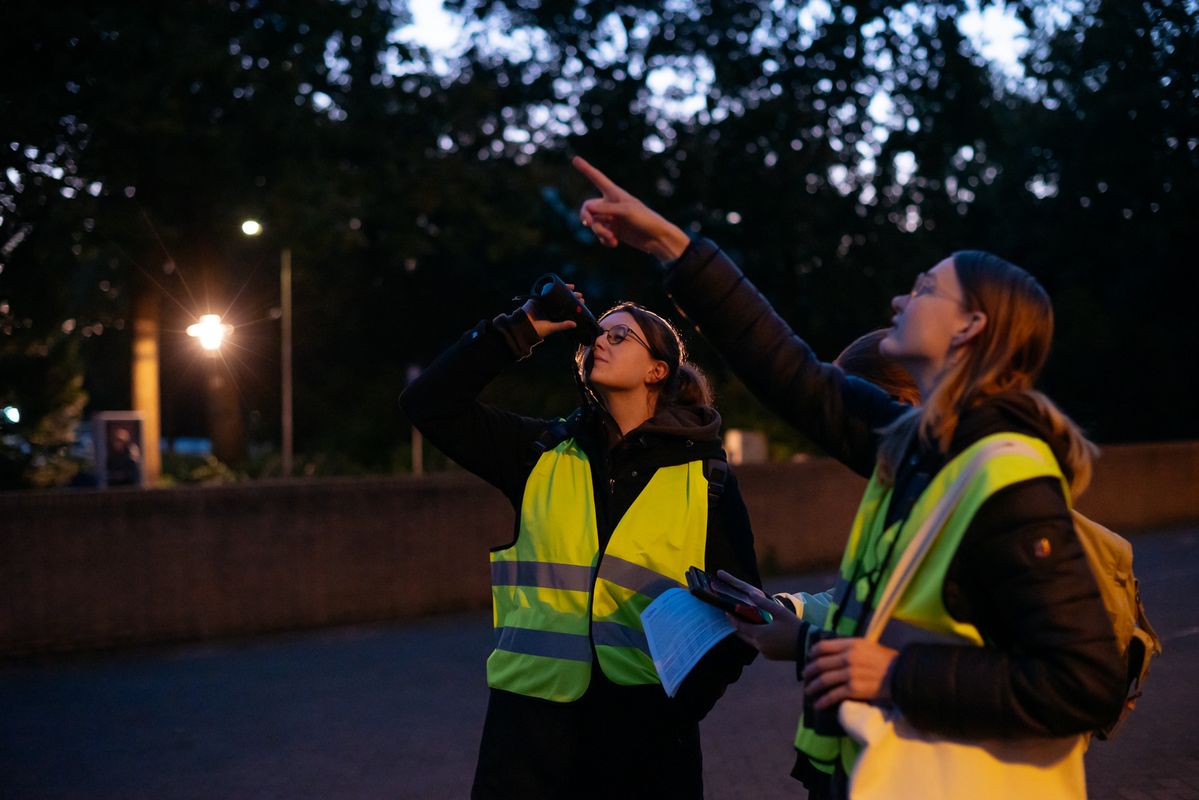
Of course, mapping that invisible world doesn't stop when night falls. Just then a very special world unfolds that remains hidden during the day! Students, with their night vision goggles, binoculars, reference books and logbooks, also went in search of life around the theater in the dark.
October 2024 - Expeditions in full swing!
There have already past event quite a few adventurous expeditions! Marjolijn has gathered a lot of information about the green world at the Parktheater. We’d love to share her latest findings with you in her second blog post:
In the grid of the floor in the Philipszaal we find two paper fish. They shoot away before we have even had a good look at them. Or actually, shooting is not quite the right word. It is a lightning-fast wobble, like fish do under water. They are land fish. Scaly, glossy to dark gray, a carrot-shaped body and body-length antennae. Contrary to their name: insects. Belonging to the fringe tails and close relatives of the more famous silverfish.
Most information about paperfish can be found on pest control pages. There are lure boxes, glue traps, your house must be sealed, all cracks and seams locked. The paperfish shows where your house is porous, where outside crawls in, no matter how you lock yourself up.
It's striking, most of the animals we find in the theater get attention mainly from pest control services. They are animals to smother, suck up, trap. They are a nuisance to us.
In the case of the paperfish, the name gives away what it's all about: they eat paper, slowly digesting the spines of books, nibbling the edges af contracts. They feed on stamp albums and the glue of your expensive wallpaper.
They need to eat other things, too. Once upon a time, these weren’t paper fish but bark fish, leaf fish, and glucose fish. Like the springtail, the species is ancient and has existed for more than 400 million years. Seen this way, you can think of the cave system we call the Parktheater as a sort of micro-scale Jurassic Park. Most tenacious survivors find refuge here. But it’s a constant battle—against chlorine, wet wipes, bright lights, and soap; against the idea that a living environment must be as sterile as possible.
The paperfish is one of the rare creatures that can survive right beneath the play, where it’s bone-dry and dark—an impossible combination for most life forms. These pocket-sized dinosaurs dare to venture there. Wobbling night after night beneath the feet of human actors performing on play. Gnawing away at their knowledge, at their printed scripts and A4-sized storyboards.
And when food is momentarily unavailable, because so little is printed out these days, they stay afloat. They can go up to 300 days without food. And what stupidly moves me the most about everything I read about the paperfish: they can live for eight to 10 years. Exactly the same age as my two children. Somehow I think insect lives are always short. Maybe because we value them so little. What lives short often seems to matter less from the perspective of a human animal. I know that's nonsense, that crucial ecosystem processes depend on short-livers, yet this belief is diep ingrained in me. And so I am impressed by all the years a paperfish travels. Years in which he or she molts a hundred times. Constantly reinventing itself with those prehistoric scales, eating entire archives in the meantime.
For centuries, they’ve past event seen as destroyers of knowledge, but in an age of excess, we might also consider them important cleaners. Messengers from the late Precambrian era who tell us that not everything needs to be preserved. What we call knowledge is food for other animals.

A NERVOUS QUEEN AND THE POISONED NEST
At a red-painted exterior door we encounter a small group of seed ants. It is projection perhaps, but they seem panicked. Nearby is an ant bait box and scattered around them are the dead bodies of conspecifics. The worker ants are walking up and down in rapid succession. Perhaps they are culling the dead; perhaps they are bringing the poisonous lure from the control box to their nest, where there will then be more victims.
As is true for all the animals we encounter in the theater, the first google entries for the seed ant are pages of pest control companies. I'm stuck on that word. On-pet. The prefix 'on' that says this is not a real animal.
And what is an animal that is not a real animal? Useless, meaningless. An animal to exterminate. The seed ants themselves seem imbued with utility, restlessly moving down the corridor, through a crack into the wall and back again, purposefully building a nest that is probably doomed to die because they accidentally nested on the wrong side of a door.
If it is not poisoned, the grass ant nest can grow large, a collection of some ten thousand individuals. The group we find seems to consist of a few dozen.
The queen paces back and forth. She wants to go outside, she has to go outside, it is spring, time for the wedding flight. Everything in her wants to go high, higher into the sky, chased by the males who fertilize her - if they are strong enough. They die after the flight; the queen lays up to 10,000 eggs in the years that follow. But that huge red door is shut and around her her people succumb to deadly poison.
After a dream about ants, I once searched a dream atlas for the meaning of this animal in human culture. Dissatisfaction was the answer. Those who dream about ants feel small and unseen. This seemed to me to be a typical interpretation of bipeds, who too often think size equals importance. The ant could just as easily stand for perseverance, for strength. This animal can carry ten to fifty times its own body weight; the workers remain productive until death.
Ants dream too—at least the queens do, according to research from an American university. The workers have to make do with 250 power naps of about a minute each day, but the queen sleeps longer—about six minutes at a time. During such rest periods, the movements of her antennae indicate something similar to what humans call REM sleep. It’s the phase of sleep during which dreaming is most intense. What does this queen dream about? A door opening? A never-ending nuptial flight? Or is it a nightmare about poisoned workers?
We lift her up, bring her out through the reception area. There she goes. No idea what will become of her, where are the males who must be chasing her now? Will she soon go besotted looking for that poisoned nest? Has the ant bait box permanently destroyed her life or is this rapid ascent the beginning of a second life?